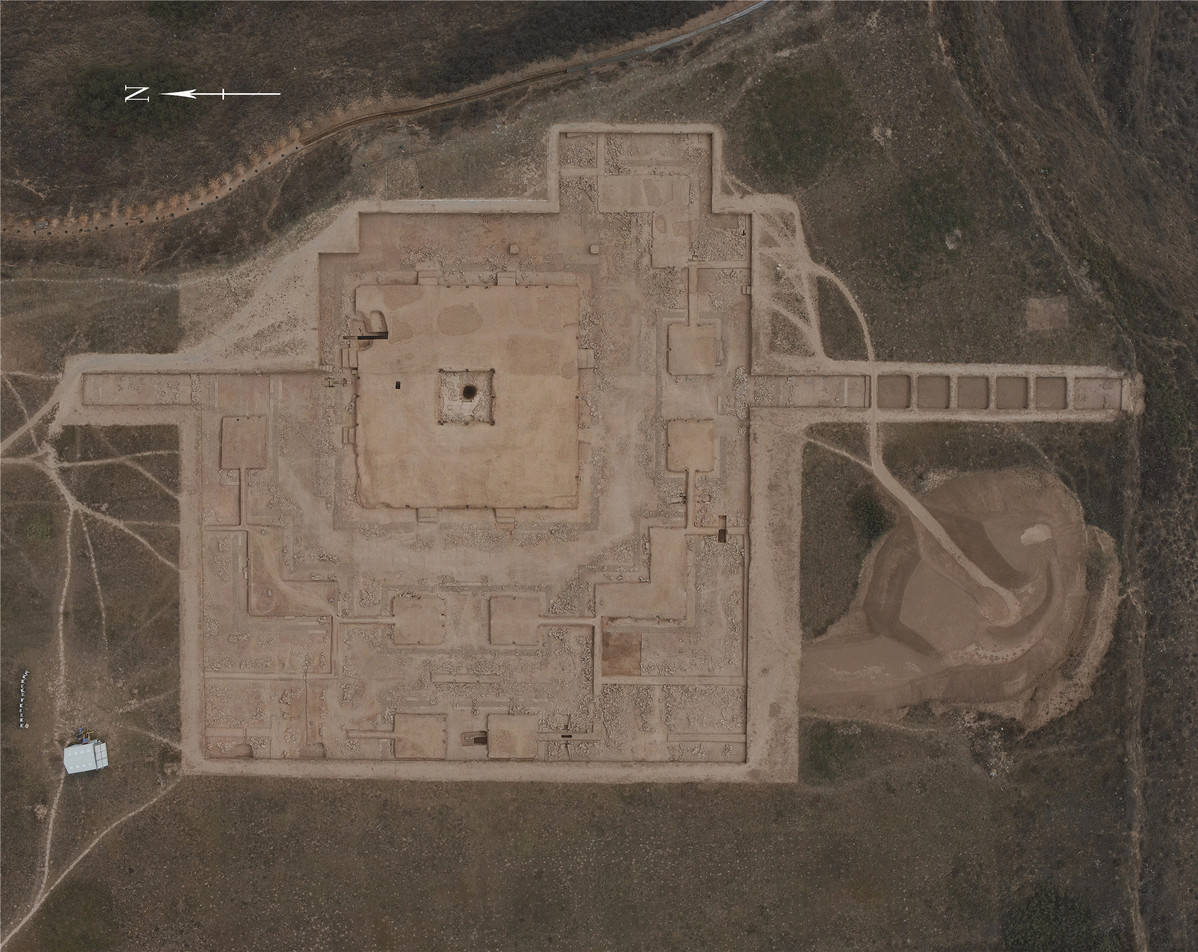
Sijiaoping Site
Introduction
The Sijiaoping Site, located in Lixian county, Gansu province, is a significant archaeological discovery that has garnered attention for its historical and cultural importance. Situated on an altered mountaintop at an altitude of 1,867 meters, the site spans approximately 28,000 square meters and is characterized by a large complex of earthen architectural remains. Recognized as one of China's top 10 new archaeological discoveries of 2023, the site offers a unique glimpse into the architectural and ceremonial practices of the Qin Dynasty (221-206 BC). The site's discovery has provided valuable insights into the early architectural styles and ritual systems of the period, marking a crucial chapter in the study of ancient Chinese history.
Historical Background
The Sijiaoping Site is closely tied to the history of the Qin Dynasty, a period marked by the unification of China under Emperor Qinshihuang. The Qin state, which rose to power during the chaotic Spring and Autumn (770-476 BC) and Warring States (475-221 BC) periods, eventually moved its political center eastward to present-day Shaanxi province. However, the area that is now Lixian county was once a vital region where generations of Qin rulers resided before this relocation. The site's name, Sijiaoping, meaning "a quadrangle plain", reflects the flattened mountaintop on which the ceremonial structures were constructed, suggesting a deliberate effort to create a space for significant rituals.
The Qin Dynasty is known for its centralized power and systemic governance, and the Sijiaoping Site embodies these characteristics through its architectural layout and design. The site's discovery adds to the understanding of the Qin Dynasty's sacrificial and ceremonial practices, which played a central role in reinforcing the authority and unity of the empire. The region is also home to the Dabuzishan site, known for its Qin-state mausoleums, further highlighting the area's importance in Qin history and cultural heritage.
Archaeological Discoveries
From 2020 to 2022, a joint archaeological team led by the Gansu Provincial Institute of Cultural Relics and Archaeology and Shanghai-based Fudan University conducted extensive excavations at the Sijiaoping Site. The team uncovered a vast complex of architectural remains surrounded by rammed earth walls. The central part of the site features an earthen terrace, flanked by auxiliary structures at each corner, exhibiting a symmetrical layout indicative of the rigid ritual system practiced during the Qin Dynasty.
The excavations revealed a plethora of architectural components, including tiles, bricks, ceramic pipes and other structural elements. These findings facilitated the dating of the site to the period when the Qin state consolidated its power and unified China. The presence of a drainage system and the high-level building techniques employed in the construction further underscore the sophistication and planning characteristic of Qin royal architecture.
The Sijiaoping Site stands out as a large-scale and uniquely laid-out ceremonial structure, a rarity in previous archaeological findings. This discovery enhances the understanding of the ceremonial and architectural evolution in the early years of the centralized Qin Dynasty, providing a clearer picture of the empire's grandeur and organizational complexity.
Cultural Significance
The Sijiaoping Site holds considerable cultural significance as it represents the architectural and ceremonial heritage of the early Qin Dynasty. The site's unique layout and construction techniques offer insights into the ceremonial practices of one of China's most influential dynasties. The architectural remains suggest a high degree of planning and sophistication, reflecting the centralized power and ritualistic practices that characterized the Qin state.
The discovery of the site has sparked interest in the early-stage Qin culture and its interactions with neighboring regions, including nomadic ethnic groups. This has led to broader research efforts aimed at decoding the cultural and historical context of the Qin Dynasty's rise to power. The site's significance extends beyond its historical value, as it provides a tangible connection to the cultural practices and societal structures of ancient China.
Preservation Efforts
Preservation efforts for the Sijiaoping Site are critical to maintaining its integrity and ensuring that the valuable information it holds is protected for future study. The site's inclusion in China's top 10 new archaeological discoveries of 2023 highlights its importance and the need for careful conservation. Archaeologists and cultural heritage organizations are focused on safeguarding the site's architectural remains, employing measures to mitigate environmental and human-induced threats.
These preservation efforts are crucial not only for protecting the site's physical structures but also for facilitating ongoing research and educational opportunities. By preserving the Sijiaoping Site, scholars and the public alike can continue to explore the rich history and cultural heritage of the Qin Dynasty, contributing to a deeper understanding of China's ancient civilization.








